Old Walls, New Decisions: Navigating the Choice Between Restoring and Replacing Historic Masonry
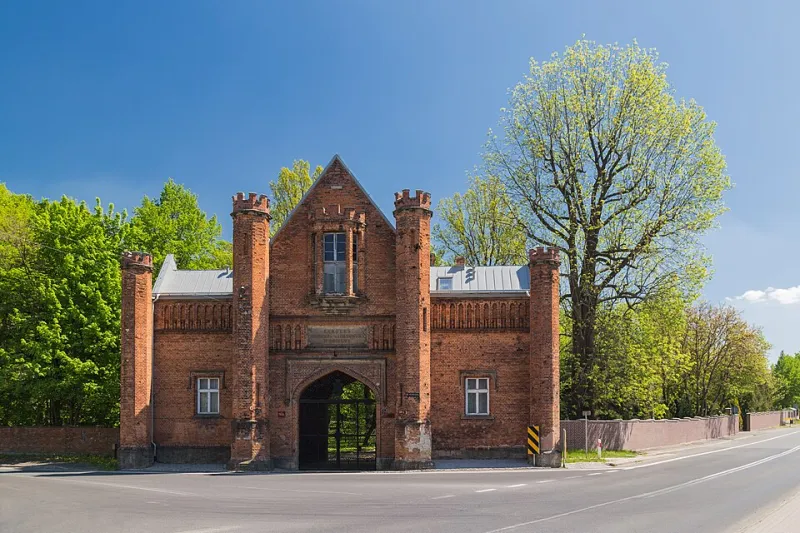
Photo: Marcin Konsek, CC BY-SA 4.0, via Wikimedia Commons
There is something irreplaceable about a century-old brick façade or a hand-laid stone foundation. It carries with it not only the weight of the building above but also the memory of the craftsmen who built it—often using techniques and materials that are no longer in common production. When that masonry begins to deteriorate, the instinct to preserve it is entirely understandable. But preservation is not always the most prudent choice, and replacement is not always the concession it might feel like.
At Five Star Masonry LLC, we have worked on everything from Federal-style townhouses in the mid-Atlantic to early twentieth-century commercial buildings in the industrial Midwest. The question of restoration versus replacement comes up regularly, and our answer is never automatic. It is the product of careful assessment, honest conversation, and a genuine respect for both the structure and the client's long-term interests.
Understanding What You Are Actually Dealing With
The first step in any historic masonry evaluation is an honest diagnosis. Deterioration on the surface—staining, efflorescence, minor spalling—does not necessarily indicate structural compromise. Conversely, masonry that looks reasonably intact from the sidewalk can harbor serious problems behind its face: failed ties, saturated backup wythe, or mortar that has long since lost its binding capacity.
A professional inspection is not optional here. It is the foundation of every sound decision that follows. Without understanding the full condition of the existing masonry, any recommendation—whether to restore or replace—is little more than a guess.
The Case for Restoration
When historic masonry is structurally sound at its core, restoration is almost always the preferred approach, for reasons that span aesthetics, economics, and cultural stewardship.
Aesthetic continuity is perhaps the most immediately obvious argument. Historic brick and stone possess a character that modern reproductions rarely replicate with complete fidelity. The slight variations in color and texture that come from hand-formed or early machine-made brick are the product of materials and processes that no longer exist at scale. Once that material is demolished, it is gone. Replacement masonry, however well-chosen, will read as new—and in a historic neighborhood or on a landmark property, that distinction matters enormously.
Financial logic also frequently favors restoration. A complete masonry teardown and rebuild involves not only the cost of new materials and labor but also the disposal of the demolished material, the potential disruption to adjacent structures, and in many cases the expense of navigating historic preservation review boards. For properties in designated historic districts—common in cities like Savannah, Philadelphia, Charleston, and Boston—demolition of original fabric may not even be permitted without extensive review.
One of our recent projects involved a late-Victorian commercial building whose owner had initially assumed the deteriorated brick façade required complete replacement. After a thorough evaluation, our team identified that the damage was largely confined to the mortar joints and a narrow band of spalled brick at the cornice line. Through selective repointing using a period-appropriate lime-based mortar and targeted brick replacement sourced from a salvage yard with matching period brick, we restored the façade to full structural integrity while preserving approximately 85 percent of the original material—at roughly half the cost of a full rebuild.
When Replacement Is the Right Answer
Restoration has its limits, and a responsible masonry contractor must be willing to say so clearly. There are conditions under which replacement is not merely acceptable but necessary.
Structural failure is the clearest threshold. When the backup structure—whether that is a brick cavity wall system, a concrete masonry unit backup, or a wood-framed structure—has been compromised by water infiltration over an extended period, the outer masonry veneer may be the least of the owner's problems. In cases where we have found deteriorated lintels, failed wall ties, or brick that has lost more than a third of its original strength through freeze-thaw cycling, we recommend replacement without hesitation.
Severe displacement or bowing is another indicator. Masonry walls that have shifted significantly out of plumb or developed pronounced bulges are communicating structural distress that repointing and surface repair cannot address. Attempting to cosmetically restore a wall in this condition is not preservation—it is postponement of a more serious failure.
We were engaged several years ago to assess a mid-century institutional building whose owners hoped to restore the original brick exterior as part of a broader renovation. What we found was a wall system that had been repeatedly repointed with a Portland cement mortar far harder than the original soft brick could tolerate—a common and damaging mistake in older buildings. The incompatible mortar had caused the brick faces to spall at an accelerating rate, and large sections of the wall had lost structural cohesion entirely. In that case, we recommended and executed a full replacement using a brick blend selected to complement the building's original palette, paired with a mortar specification appropriate to the new units. The result honored the building's character without pretending that the original fabric was salvageable.
The Mortar Question
No discussion of historic masonry restoration is complete without addressing mortar compatibility—a subject that deserves more attention than it typically receives. Historic brick, particularly pre-twentieth-century soft brick, was designed to work with lime-based mortars that are slightly softer and more flexible than the brick itself. This allows the mortar joint to serve as a sacrificial element, absorbing movement and moisture cycling without transferring stress to the masonry units.
When harder modern mortars are used in repointing historic masonry, the dynamic reverses: the brick absorbs the stress instead of the joint, and spalling accelerates dramatically. Matching mortar hardness to the existing masonry is not a detail—it is a fundamental requirement of responsible restoration work.
Making the Decision
For property owners navigating this choice, the following questions provide a useful framework:
- Has a qualified professional assessed the full depth and extent of the deterioration, not just the surface?
- Is the existing masonry structurally sound enough to support restoration, or has it been compromised beyond the point of repair?
- What are the regulatory constraints? Is the property in a historic district with requirements governing material replacement?
- What is the long-term ownership horizon? A property held for generations warrants a different calculus than one being prepared for near-term sale.
- Has the mortar specification been properly analyzed to ensure compatibility with the existing or replacement masonry?
There is no universal answer, and any contractor who offers one without a thorough site evaluation should be viewed with caution. At Five Star Masonry LLC, we approach each historic masonry project as the unique challenge it is—bringing the same standard of craftsmanship to a careful restoration as we do to a complete rebuild.
The walls of older buildings tell stories. Our job is to make sure those stories continue to be told, whether that means preserving what is there or building something new that is equally worthy of lasting.
